Content on this page requires a newer version of Adobe Flash Player.

Get Adobe Flash player


Content on this page requires a newer version of Adobe Flash Player.

Get Adobe Flash player


These two groups, the Altones and the Beverly Hills Painters,  are one in the same. Not   much if anything has been written about them, and regretfully,Albert Mastry and Tony  Mastry, who comprised the groups, have both passed away. They started as the Altones in about 1959, using the first part of their names AL and TONY-thus the Altones. Albert Mastry  (1930-2002)  played guitar and was heard on vocals. Tony Mastry  (1920- 1997) was on guitar, bass, harmonica, and vocals. The rest of the group   included   Ray Sharkey on drums and Jack Freeman on keyboards. The group's   manager   was one   Jack Gerard, a notable character in the payola scandal in the Los Angeles area. The Altones released two records. Make that 1 and 1/2 records. They had a release on Archer and   they split billing on a sole release on Gardena. Apparently, they didn't copyright their name, and it was then taken  by a black vocal  group. The only other Altones I can find  reference to is one associated with the CBC and  a C+W program called  Red   River Jamboree. Tony Mastry was a paint foreman  at the Beverly Hills Hotel from 1956 to 1963, and followed the owner, Hernando Courtwright, when Mr. Courtwright bought the Beverly Wilshire Hotel and sold the other. Albert Mastry worked with Tony at the hotel, and moved on to the Beverly Hilton around 1963. Through their common work as painters, they changed their group name from the Altones to the Beverly Hills painters.  Under that name, they released two records on the Los Angeles based Gateway records. They also had a   re-release on the Me-Meow label around 1969. They had a short run of popularity   which  included opening for a young but   established   Aretha Franklin in 1960, and were   reigning champs on a short lived  "Star   Search"  type   program hosted by used car   dealer Cal Worthington around 1960/61,   which was   pulled off the air after just a few short months. Besides singing, they were frequent writers and arrangers. I only have a few of the records in the complete story, but this is another example of a group that almost made it.


Back To The Groups Main Page

HOME


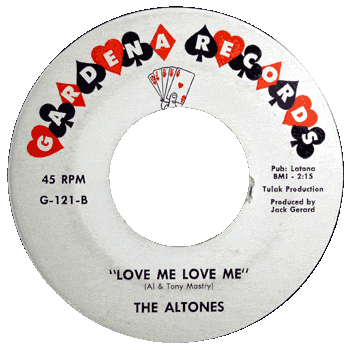
Love Me Love Me
 
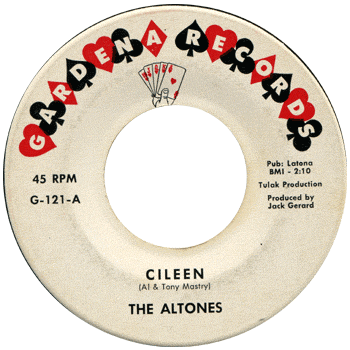
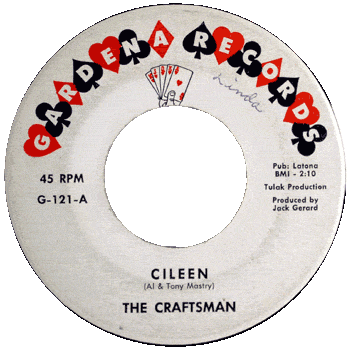
Here is the first release by the Altones on Gardena 121. "Love Me, Love Me" is by the Altones side B, the flip side"A" is the Craftsmen, and is an instrumental called "Cileen". This was reviewed in Cashbox magazine on August 5th,1961. Love Me,Love Me was   issued  a "B" grade and Cileen was given a "B+ ". Music and or Lyrics of both sides of the record are by Al and Tony Mastry, and both sides are produced by Jack Gerard. Gardena records was a local Los Angeles label that had many releases including early works by Paul Revere and the Raiders. Some copies of this record show the Altones as the artist on the "Cileen" side.
   
Love Me Archer
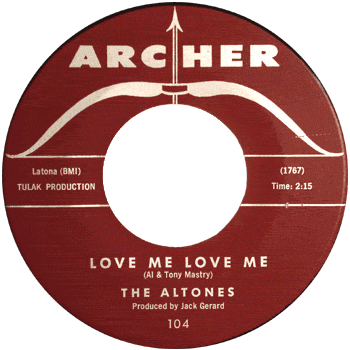
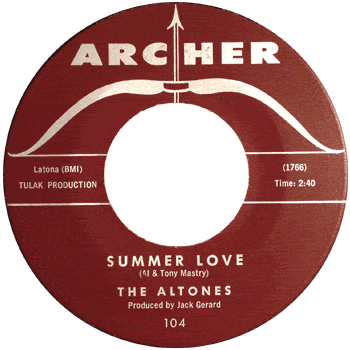
The second and last official Altones release was on the Archer label, and released in 1961. Though not much identification on the label, Archer records had to be a Los Angeles based label. "Love Me, Love Me" was the same as the Gardena release, and "Summer Love" was a nice slow doo wop styled ballad.
   
 
Altonesw Little Girl Acetate
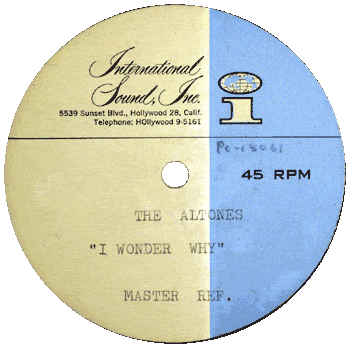
Altones I Wonder Why Acetate
 
 
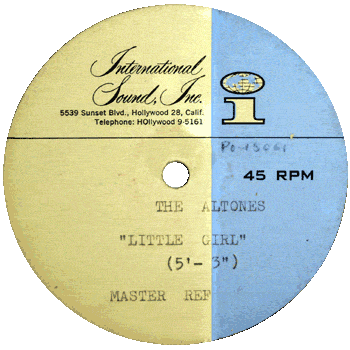
Here is the original metal acetate that shows the Altones as the group. When it was cut, they were the Altones,  but as eluded to in the intro at the beginning of the page, they were forced to rename themselves to the Beverly Hills Painters. There are several  things  to complicate the issue. The first release on Gateway (Shown below)   was  "Model   A Heap". This acetate has the second Gateway release, "Five Foot Three". Maybe they were both cut at the same session? The flip on this acetate is called "I Wonder Why", and listening to the record, seems correct. But, at the end of the record it changes to I Know Why,which makes sense in the story being told. This is key   information when you read below in the next, to the last text section on this page, and the  connection to the Me-Meow label. Also,the second Gateway release shows the  title as "I Know Why". It must have been a conscious change between studio recording  and pressing the  record.
 
 
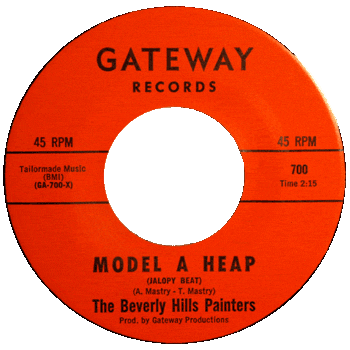
Model A Heap
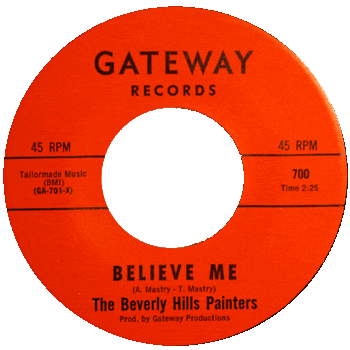
Believe Me
 
Release number one, now as the Beverly Hills Painters, "Model A Heap" was an up tempo car song.The flip side, "Believe Me" is a great doo wop style harmony ballad. This is the most common of the two gateway releases, but was still a fairly limited Los Angeles area issue. Both Al and Tony have the writing and producing credits on both sides.
 
   
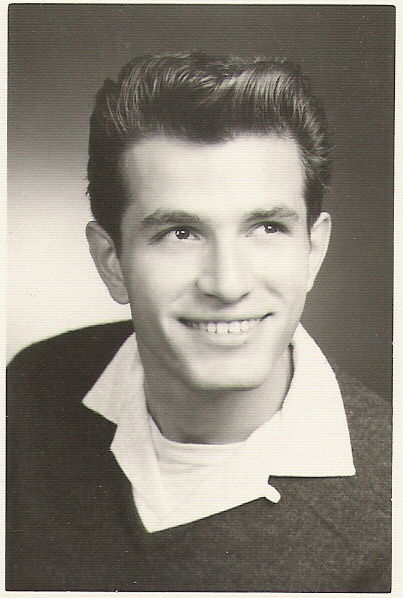
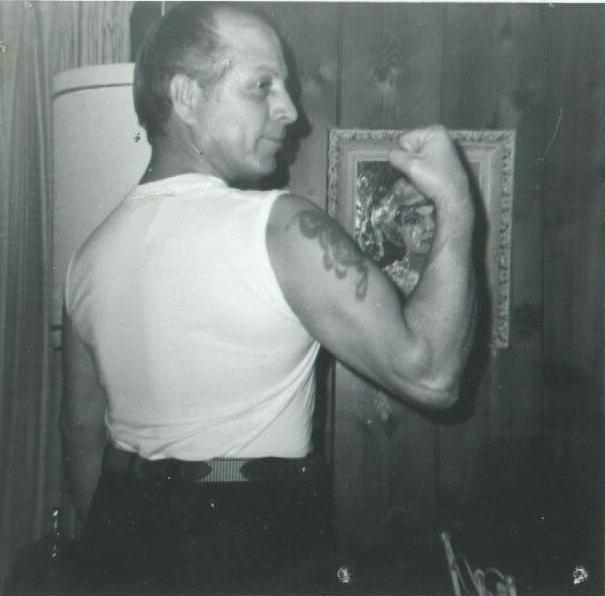
Pictured to the right is Tony Mastry with a photo taken in 1967.
Tony Mastry Picture
   
 
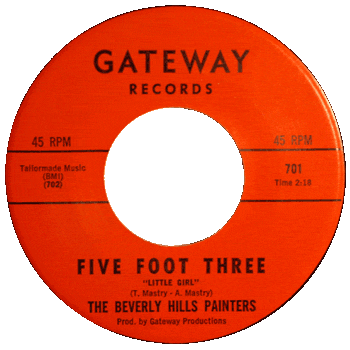
Five Foot Three
I Know Why
 
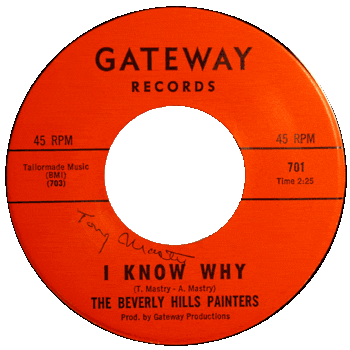
The second  and final original release on Gateway by the Beverly Hills Painters, "Five   Foot Three  (Little Girl)" was the intended air side and another great flip "I Know   Why"  rounded it out. That's Tony doing the un-enhanced falsetto. Again, Al and Tony with the writing and  performing credits. The "A"  side featured Tony with the speaking verses and intro. According  to  Dave  Mastry,  Five Foot Three was "Written Around"  and  became "Hey Little Girl" by the Syndicate Of Sound. This is also the same  pairing as the acetate above. The I Know Why  label has been signed by Tony.
   
Me Meow I Know Why
Me Meow Five Foot Three
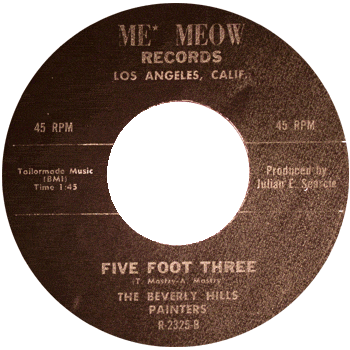
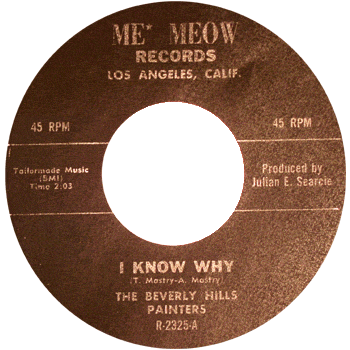
Here is the issue on Me Meow. The label looks like it issued several records around 1968 or 1969. it was based in Los Angeles, and a producers name was added - Julian E. Searcie. It's a name that had not been seen on any of the previous releases. Interesting to also note that the run time on both singles is shorter on the me Meow issue.
   
 
Joey Norman Picture
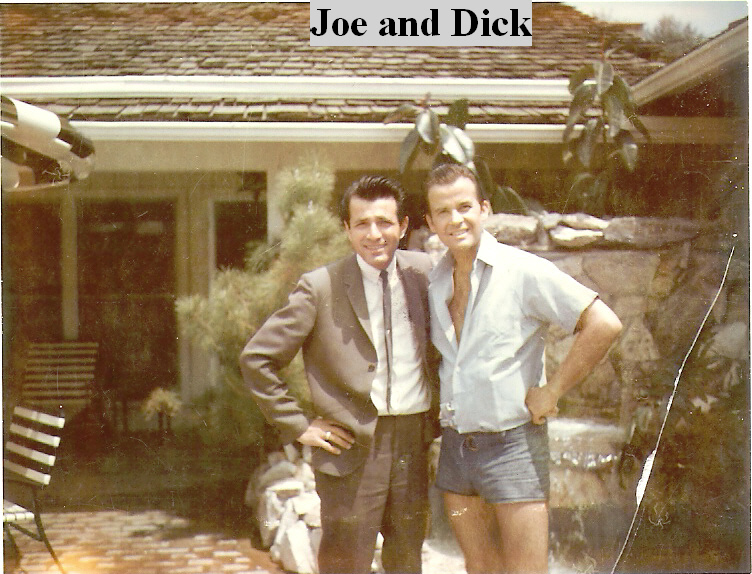
Joey Norman And Dick Clark Picture
The picture on the left is Joey Norman, and the shot on the right was taken in Dick Clark's backyard in 1967, Joey Norman is on the left, Dick Clark on the right. Joey Norman is the next artist shown below with a connection to the Altones and Beverly Hills Painters. Joey Norman went on to establish a highly successful construction company in Los Angeles, working with the biggest stars in show business.
 
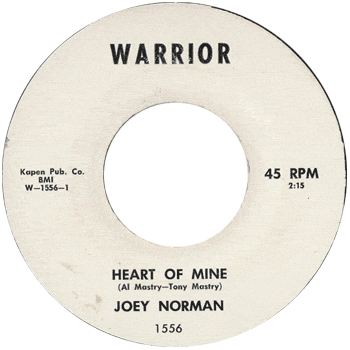
Joey Norman Heart Of Mine
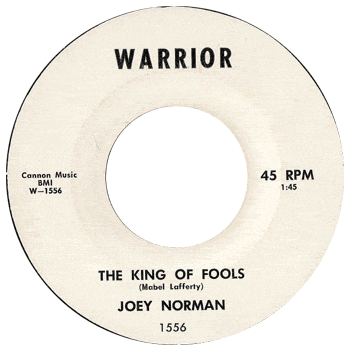
Joey Norman King Of Fools
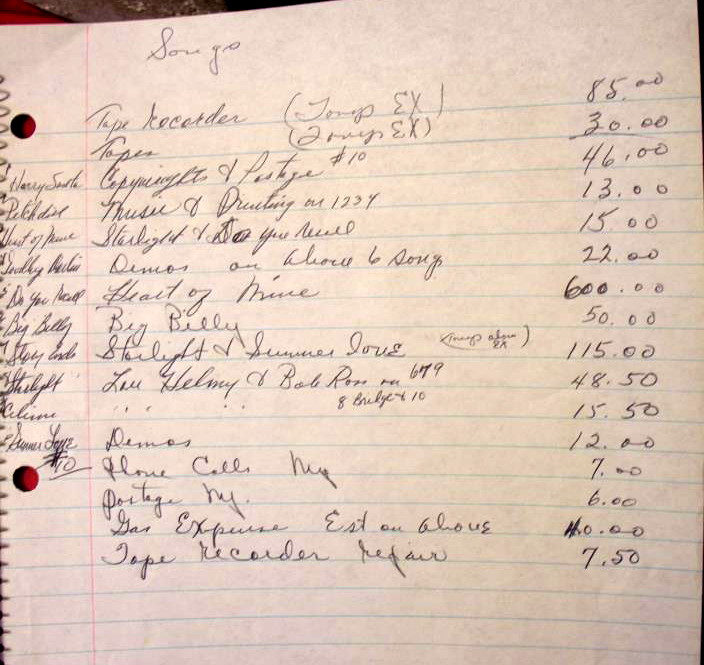
Originally from El Paso Texas, this is Joey Norman and his release of "Heart Of Mine" backed with "The King Of Fools". The record was released on the Warrior label in 1960, and was the only record Joey Norman made. Shown above is a stock white copy issue. Warrior was owned by Jesse Hodges and the label was and located at the Crossroads of the World in the heart of Hollywood. You can see that Al and Tony Mastry had writing credits for the Heart Of Mine side, although they took it to Hodges and paid him to produce it. Capitol records had interest in the record but Hodges could not come to terms with them. According to Dave Mastry, the intro on Heart Of Mine became the intro to Dreamin' by  Johnny  Burnette. Mastry also says that Connie Francis  was going to record Heart  Of Mine, but their manager, Jack Gerard, got popped for payola, and  the deal  was finished. King Of Fools has a great sound to it, and a nice guitar as well. Take a listen to both sides and see what you think. Because of Joey Norman's contract with Jesse Hodges, he was unable to record any additional records. Too bad, as these sides had a great sound to them.
   
 
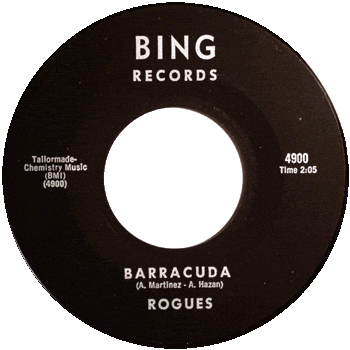
Rogues Barracuda
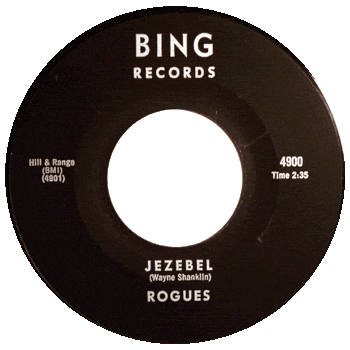
Rogues Jezebel
 
Here is an Altones/Beverly Hills Painters related record.The Rogues with "Jezebel". Jezebel was an  intended re-write of the Frankie Laine hit, and was produced by Al  and Tony in 1964. This song includes the lines "If ever a devil were born..." recorded backwards as it was done accidentally during rehearsal and the boys noticed the melody was the same forwards or backwards and left it like that in part of the cut, just because of the uniqueness that it gave their version. [And pre-dated the 'Beatles'  by a few years]. This is one of about twenty groups called  the Rogues,and is not  related to the Bruce Johnston group on Columbia. Barracuda on the flip side, is a great up tempo car song.
 
 
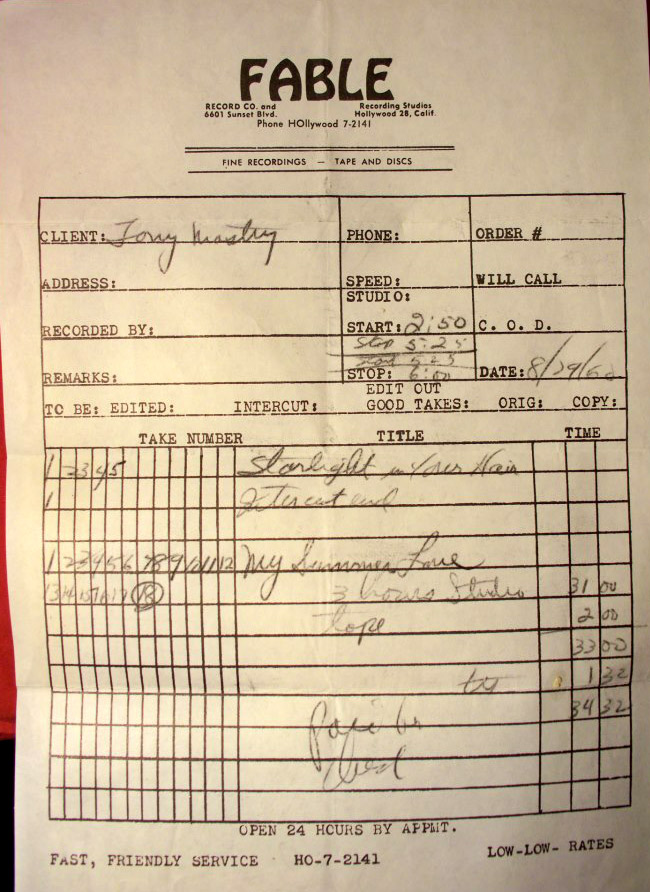
There are several other Altones,Beverly Hills Painters related records and stories. Ray Robbin recorded a song called Big Billy around 1959 on the Fable label. Music and lyrics were by Al and Tony. According to Son Dave Mastry, Big  Billy was ripped off and became Big Bad John. This record has not been verified.An odd release in the late  60's came out on the Me Meow label by the Beverly Hills Painters that paired  both sides of the acetate pictured earlier in this article, on record number  2325. Seems like an issue around the oldies revival time, and places it about five  years after the initial release of Five Foot Three. Also of note is that Tony Mastry was an extremely accomplished artist in painting and drawing and had done many portraits and landscapes over the years. He had done portraits of Grace Kelly and Dan Blocker and others along with a number of portraits of famous personages of the old and present. He also has a couple few paintings hanging in museums of which the William Cody Museum in Wyoming, and the Folsom History Museum in northern California are included. Special thanks to Dave Mastry for much of the details in this article, and Joey Norman for the record information on his release.
 
 
Gone Missing:  The Ray Robbin record Big Billy on the Fable label?
 

Up To The Top Of The Page

Back To The Groups Main Page

Email

EMAIL ME!

©2009 copyright www.colorradio.com rockin color radio